
Hopper Vibrators Australia
Hopper vibrators help powders, granules and bulk materials move towards an outlet when sticking, bridging or compaction interrupts discharge. Vibration Systems supplies electric and pneumatic hopper vibration systems for industrial applications across Australia. We consider the material, hopper dimensions, wall construction, outlet size, production rate and operating environment before recommending equipment.
Address Inconsistent Hopper Discharge
A hopper may discharge freely under one set of conditions and slow down when moisture, particle size or storage time changes. Material can form a bridge above the outlet, create a narrow flow channel or cling to the hopper walls. These problems can interrupt feeding, weighing, batching and packaging processes.
Industrial vibrators introduce controlled movement into the structure. The aim is to support consistent flow without applying unnecessary force. Our broader
material flow solutions can also help when the problem involves several parts of a bulk handling system.
Choosing a Hopper Vibration System
Equipment selection should account for:
- Material density and particle characteristics
- Moisture and tendency to compact
- Hopper wall material and thickness
- Outlet dimensions and geometry
- Required feed or discharge rate
- Available electricity or compressed air
- Operating cycle and site conditions
A hopper vibrator motor that is too small may not transfer enough energy to the problem area. Excessive force may compact some materials or place unnecessary stress on the hopper. Technical selection helps establish a suitable balance.
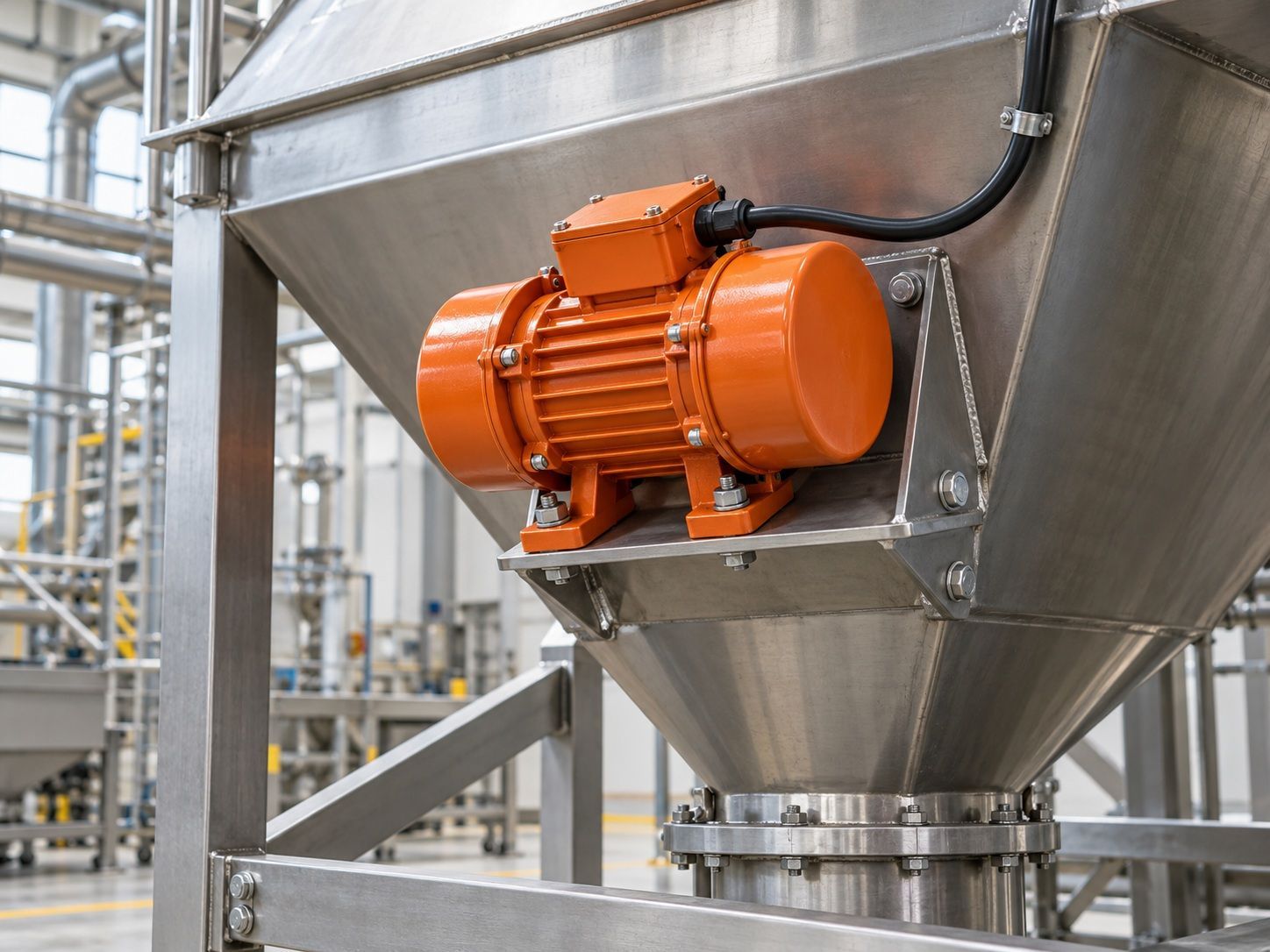
Electric Models
Electric hopper vibrators can provide dependable vibration for fixed industrial installations. Different motor sizes, electrical configurations and force settings allow the system to be matched to the hopper and process. View our range of
industrial electric vibrators for available configurations.
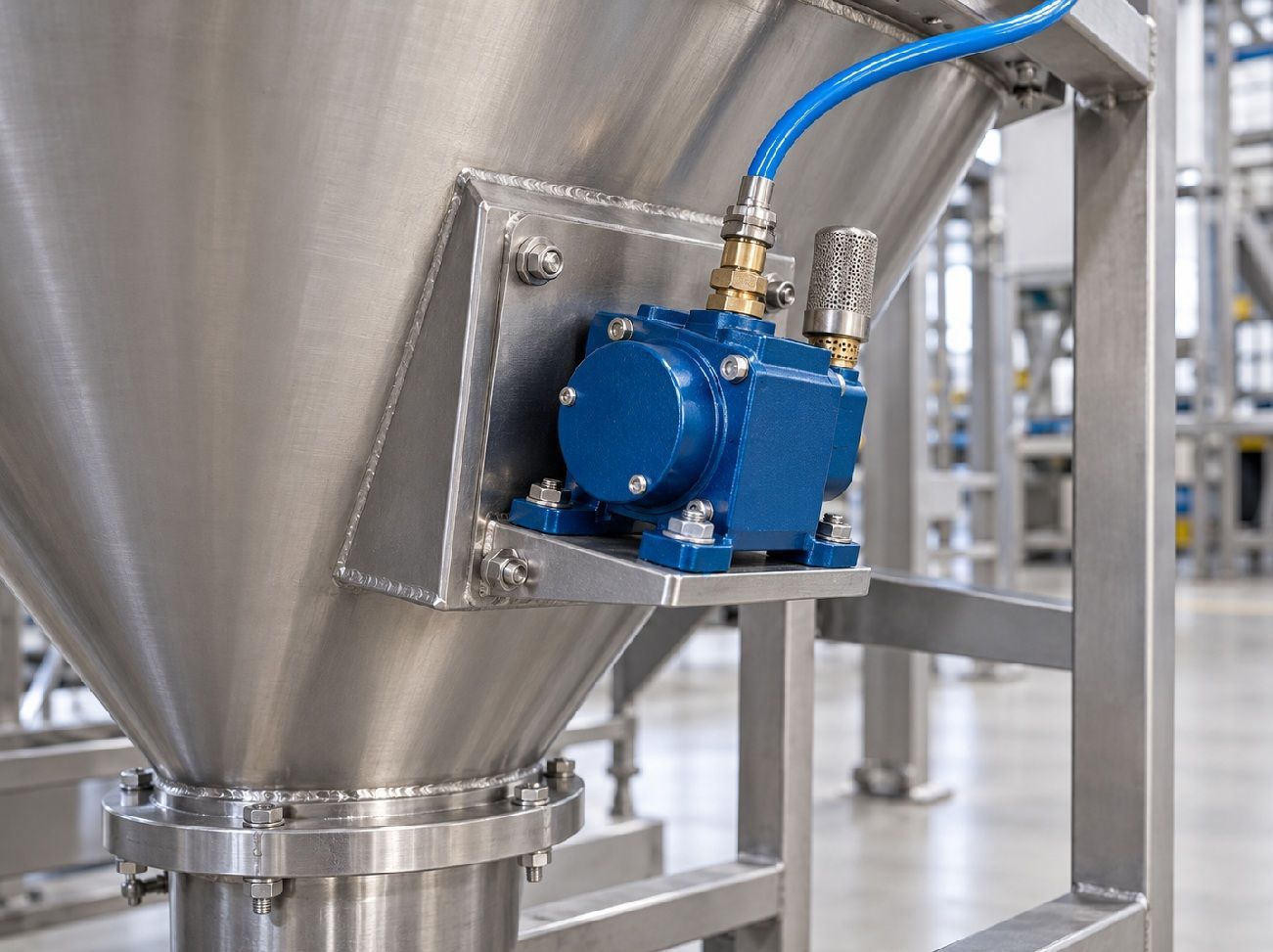
Pneumatic Models
Pneumatic hopper vibrators use compressed air and may suit sites where air is already available. Rotary and linear models create different vibration patterns. Air pressure can be used to adjust the output of applicable pneumatic equipment.
Our pneumatic rotary vibrators include ball, roller and turbine types. Pneumatic linear vibrators are available for applications requiring linear movement or impact.
Mounting the Vibrator
Mounting determines how vibration moves through the hopper. Position, mounting channel design and structural stiffness can influence the effective area. The vibrator and mounting arrangement should be selected together rather than treated as separate decisions.
Vibration Systems can advise on suitable
vibrator mounting options and controls for the required operating cycle.
Discuss Your Hopper Flow Problem
Tell us what material is being handled, where it stops flowing and how the hopper operates. We can recommend hopper vibrators and supporting equipment for the application. Call 1800 300 877 or email sales@vibrationsystems.com.au.
FAQs About Rail Wagon Unloaders in Australia
What are hopper vibrators used for?
These vibrators encourage bulk materials to move towards the outlet. They are commonly considered when bridging, sticking, compaction or irregular discharge affects a production process.
Which hopper vibrator should I choose?
The correct model depends on the material, hopper structure, outlet, required flow rate and available power source. Equipment should be sized for the complete application.
Can the vibrators be controlled automatically?
Yes. Depending on the selected equipment, controls can coordinate vibration with feeding, batching or discharge cycles. The control arrangement should reflect the process and required duty.
Where is a hopper vibrator mounted?
The best position depends on where the material flow problem occurs and how the hopper is constructed. Mounting channels may be used to distribute vibration across an appropriate area.
Can the equipment work with vibratory feeders?
Yes. A hopper vibration system can support material discharge into a feeder. The hopper and vibratory feeder should be considered as connected parts of the production process.